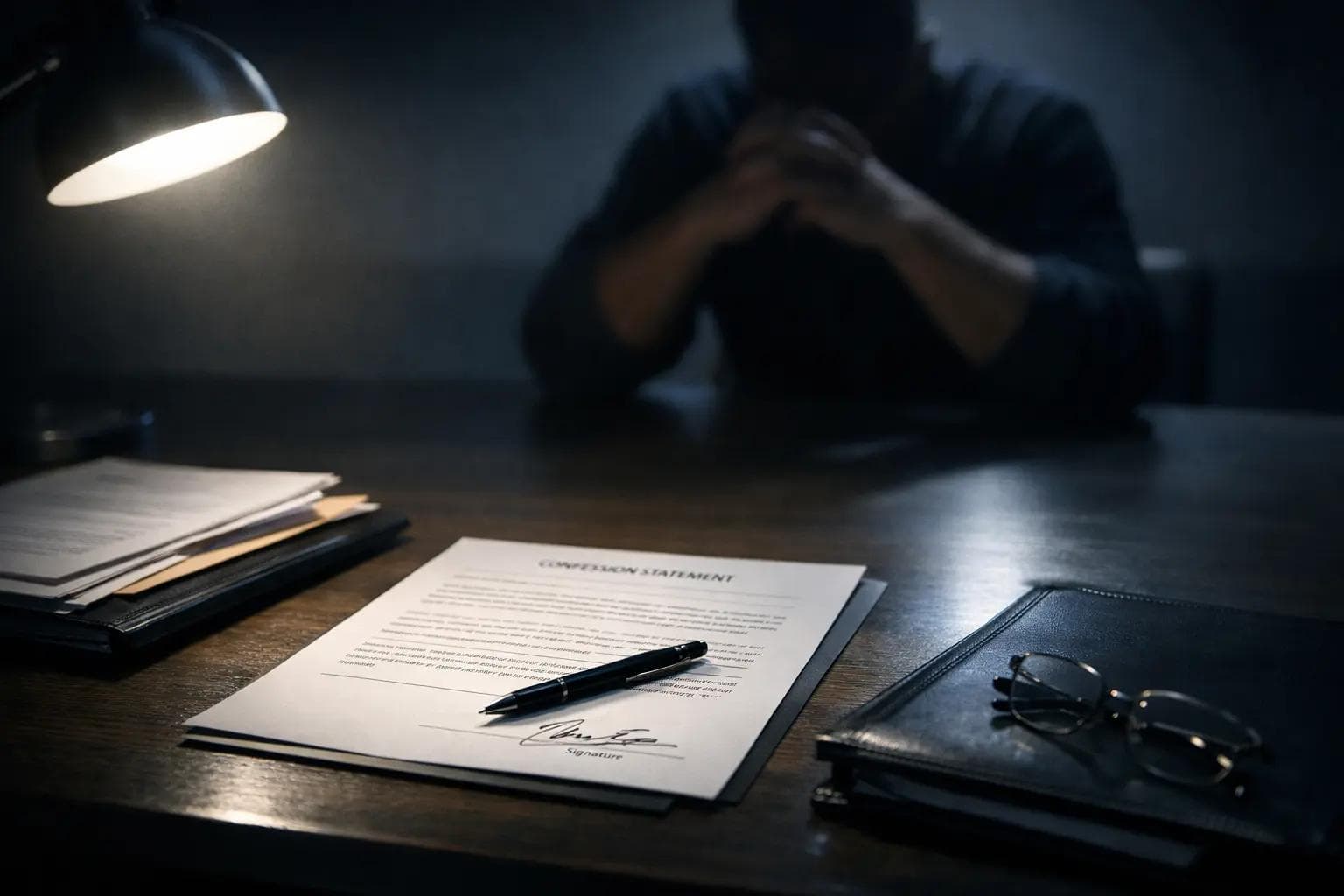
In the legal sphere, there exists an old and dangerous misconception that a confession automatically equates to establishing the truth. Reality is often far more complex. Coerced testimony and psychological pressure are invisible problems that can destroy an innocent person's life.
A coerced "confession" harms not only the accused but the justice system itself, as the actual perpetrator may remain unpunished.
Our law bureau approaches this issue with particular principled commitment. We protect not only the individual but the very concept of fair process:
Defense of the Accused: Our goal is to prevent self-incrimination resulting from pressure. We ensure that any testimony is given voluntarily and not under the influence of fear or coercion.
Myth vs. Reality
1. The "Only Physical Violence" Myth
The Myth: "Coercion only means physical violence."
The Reality: The public often believes that if a person was not beaten, coercion did not occur. In truth, the law recognizes as coercion not only physical force but also psychological pressure: threats, deception, blackmail, manipulation through family members, or any other unlawful action that compels a person to say what they do not wish to say.
2. The "Innocent Don't Confess" Myth
The Myth: "An innocent person would never confess."
The Reality: This is one of the most widespread misconceptions. In practice, numerous cases exist where completely innocent individuals have confessed to crimes they did not commit. Motivations vary: extreme stress, fear, desire to protect another person, or even false promises that "if you confess, you'll be released."
3. The "Silence equals Guilt" Myth
The Myth: "If someone remains silent or requests an attorney, they must be guilty."
The Reality: The right to silence and to request an attorney is not an indication of guilt—it is a fundamental constitutional right. It is a strategic step for self-protection, and its legal interpretation as an "admission" or "proof of guilt" is impermissible.
4. The "Signed Verdict" Myth
The Myth: "A signed confession is a final verdict."
The Reality: Many believe that signing a confession means the case is lost. In reality, the accused has the right at any stage of proceedings to change testimony or withdraw it entirely. If it is established that the original statement was obtained through coercion or procedural violations, it loses its evidentiary value.
Remember: You Have the Right to Remain Silent!
Do not give testimony and do not sign documents without an attorney present. If you are experiencing pressure, contact us immediately.